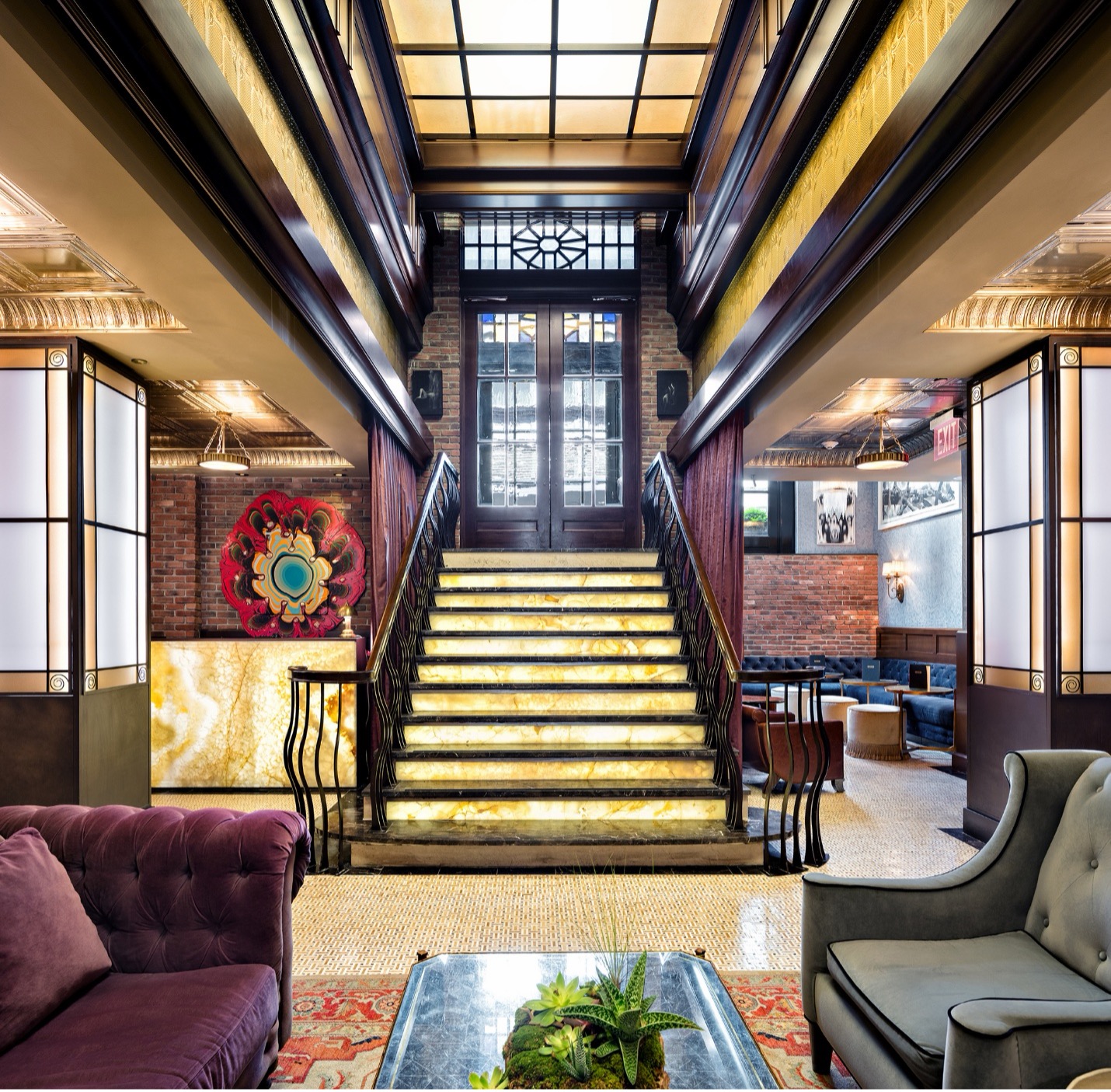
What separates exceptional hotel portfolios and asset managers from merely successful ones is almost never a single department. It’s not marketing alone, nor revenue management, design, F&B or guest service. The real competitive advantage emerges when every discipline begins reinforcing every other discipline, creating a hospitality organization whose value exceeds the sum of its individual parts.
That philosophy sits at the center of Bridgeton’s Center of Excellence – an initiative designed not as another corporate department but as the nexus that merges traditionally independent hotel functions into one coordinated strategy with scalable initiatives that still allow for local identity to be fully expressed. It’s ‘connecting the dots’ at scale.
As background, Bridgeton is a vertically integrated real estate investment, development and hospitality operating firm headquartered in New York City. The company manages over 60 properties across 17 states with a total capitalization exceeding $2 billion, including four properties in the Big Apple, inclusive of the Walker Hotels brand.
At the helm of the Center of Excellence is Darshana Jariwala who brings a system design approach after many years in the consumer-packaged goods industry. In speaking with her to explain the significance of this venture for the industry, rather than allowing branding, marketing, interior design, partnerships, guest programming, operations and training to evolve independently, the Center of Excellence looks across and cross-pollinates to ensure that all of these skillsets are intentionally aligned.

For ownership groups, the business of hospitality has historically operated through functional silos, with departments optimizing their own KPIs while only loosely coordinating with neighboring teams. Marketing drives awareness. Sales closes on group RFPs. MICE and corporate subscriptions. Ops focuses on efficiency without sacrificing service quality. Then where this may come to a head is a subject matter like design which is foremostly oriented around aesthetics but not necessarily the ops within those spaces. We’re starting to see the interconnected systems emerge through the combined commercial team (sales, marketing, revenue management and communications), but the Center of Excellence goes many steps further.
Every hotel within Bridgeton’s portfolio is treated as its own unique product, with its own audience, personality and sense of place, while the Center of Excellence provides connective tissue that ensures every discipline contributes toward the same strategic vision. To drill down to specific holdings, the boutique New York brand Walker Hotels will never be like the barefoot luxury Montauk escape, Marram, or the Sonoma County hideaway, Dawn Ranch. And yet, they can also draw from the same codified processes and methodology to ramp up their value offerings for guests.

That philosophy extends from the earliest planning stages of a project. Instead of allowing legal, marketing, operations, partnerships or guest programming to become downstream considerations, Bridgeton aims to involve every stakeholder at the beginning of development. Decisions are evaluated not only for how they solve today’s needs but also for how they influence guest experience, operational efficiency and brand evolution years into the future. As Jariwala pointed out, designing a hotel thus becomes much more than selecting finishes or furnishings; it becomes designing an ecosystem that can evolve intelligently over time.
Execution follows the same sort of nexus-like approach. Creative programming, community partnerships, onsite activations with consumer brands, new culinary concepts, sustainability initiatives, staff empowerment and operational workflows are viewed as interconnected, actionable processes rather than standalone projects amongst each hotel. Therein, even experiential programming requires upfront thought about how to make every initiative a repeatable process with cross-functional coordination rather than a one-off activation.
Overall, as hotel ownership groups continue searching for sustainable and scalable competitive advantages, this type of organizational thinking and a system design approach may prove increasingly valuable. Connecting the dots is not simply about improving communication between departments, but also creating hotels where branding informs design, design enables flexible operations, operations reinforce guest experience, partnerships strengthen community, a culture of community spurs repeat guest visits and every decision ultimately compounds enterprise value across the entire portfolio.